
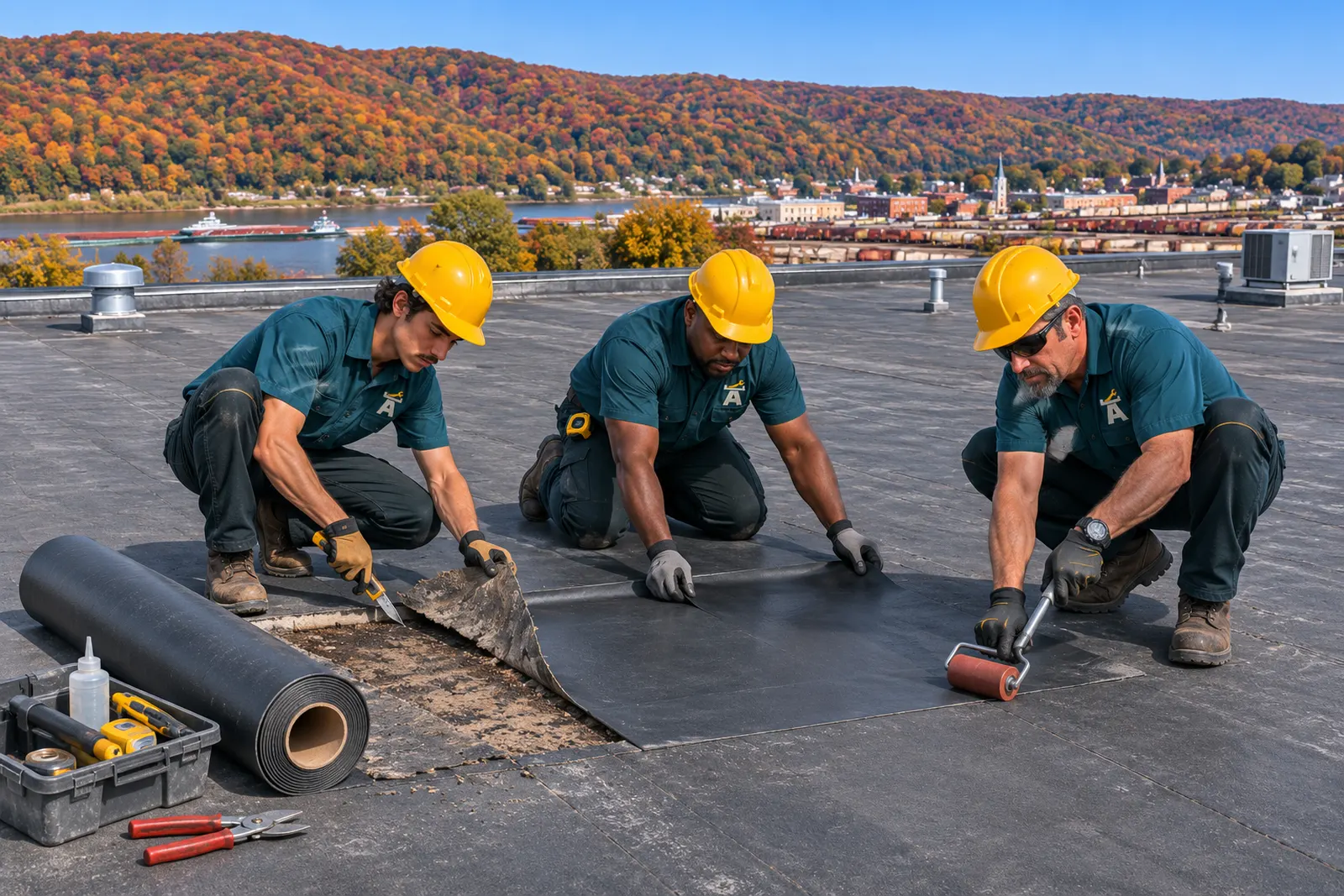
What We Do
- Leaks
- Trace from the stain to the entry point
- Membranes
- Weld, prime or cap patches that match
- Metal
- Refasten, retape laps, replace panel sections
- Records
- Dated photos and a marked roof plan
- Advice
- Say when repair stops making sense
Our roof repair company in Ashland fixes commercial roofs one failed detail at a time and says plainly when a section needs more than a patch.

As a roof repair company in Ashland, we only work on commercial, industrial and agricultural roofs: flat membranes, metal buildings and plant roofs with rooftop equipment.
We start above the stain, follow the water to where it enters and repair that detail with the material the roof already has.
Repeat leaks in the same bay usually mean the entry point is somewhere upslope. Book an inspection and we will trace it from the stain.
These items get a look on every visit, even when the call was about one stain.
Plain limits help owners plan. This is where our repair work starts and where it stops.
Seasonal checks, local weather and taxes come up often once a roof has been repaired.
Walk the roof each spring and fall and after any strong storm. Look at drains and scuppers, open seam edges, cracked sealant at pitch pans, punctures near RTUs, loose edge metal and backed-out screws on steel.
Dated photos compared season to season show which spots are getting worse.
Water in a small sealant crack freezes overnight, widens the gap and lets more in on the next thaw. Summer heat expands steel panels and loosens screws, spring storms test flashing, and fall leaves block gutters.
Most patches need a dry surface, so repair days shift around rain and cold mornings.
IRS Publication 946 lists roofs on existing nonresidential buildings among qualified improvements, so it turns on whether the work counts as a repair or an improvement. For tax years starting in 2026 the limit is $2,560,000, phased out past $4,090,000 in purchases.
Keep invoices that name the scope plainly, and let your CPA decide the treatment.
Tell us what the roof is made of and where it leaks. The first step is always the inspection.