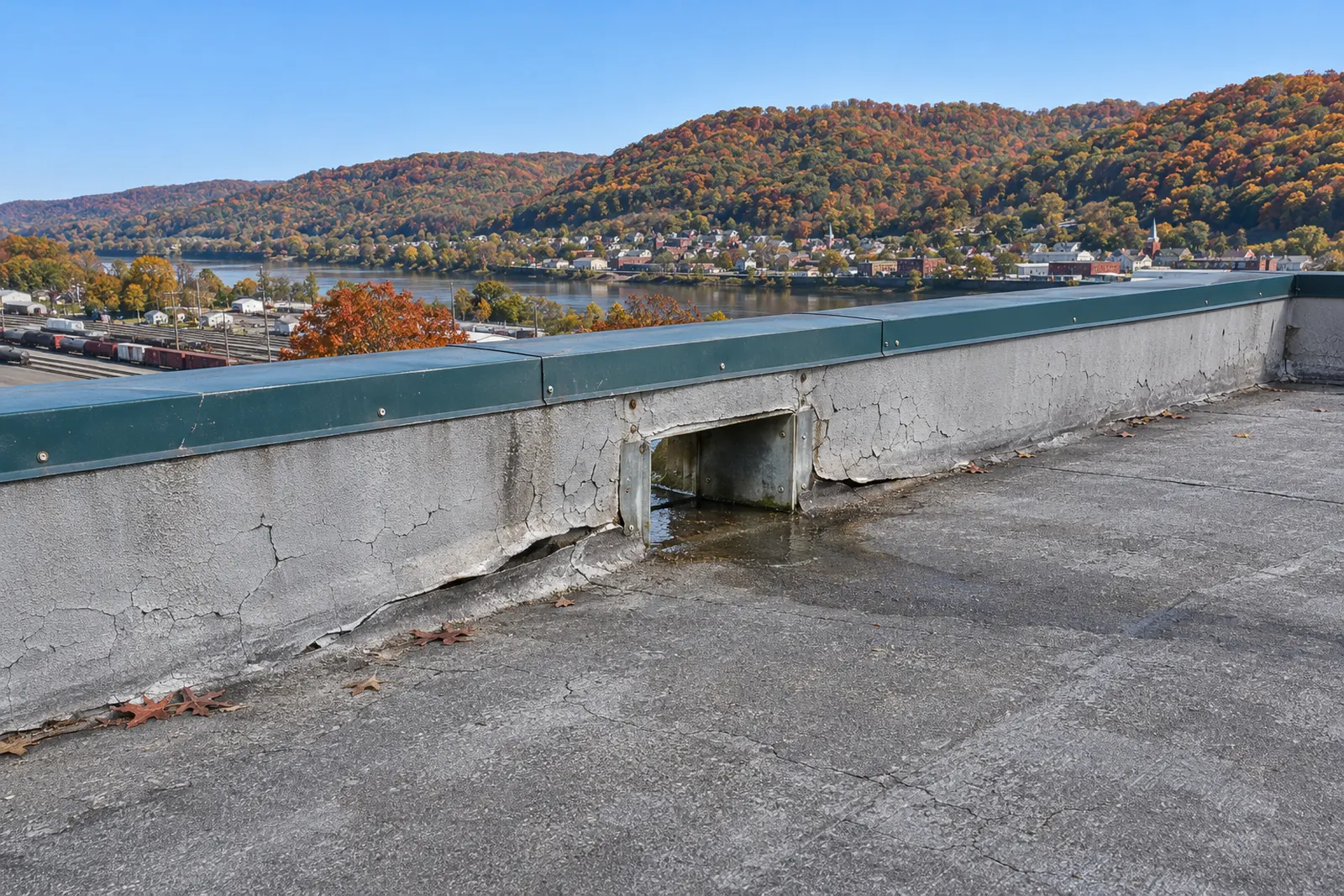
Flat Roof Repair
Low-slope membranes with open laps, blisters, ponding rings at drains and punctures beside rooftop units.
Flat Roof Repair in Ashland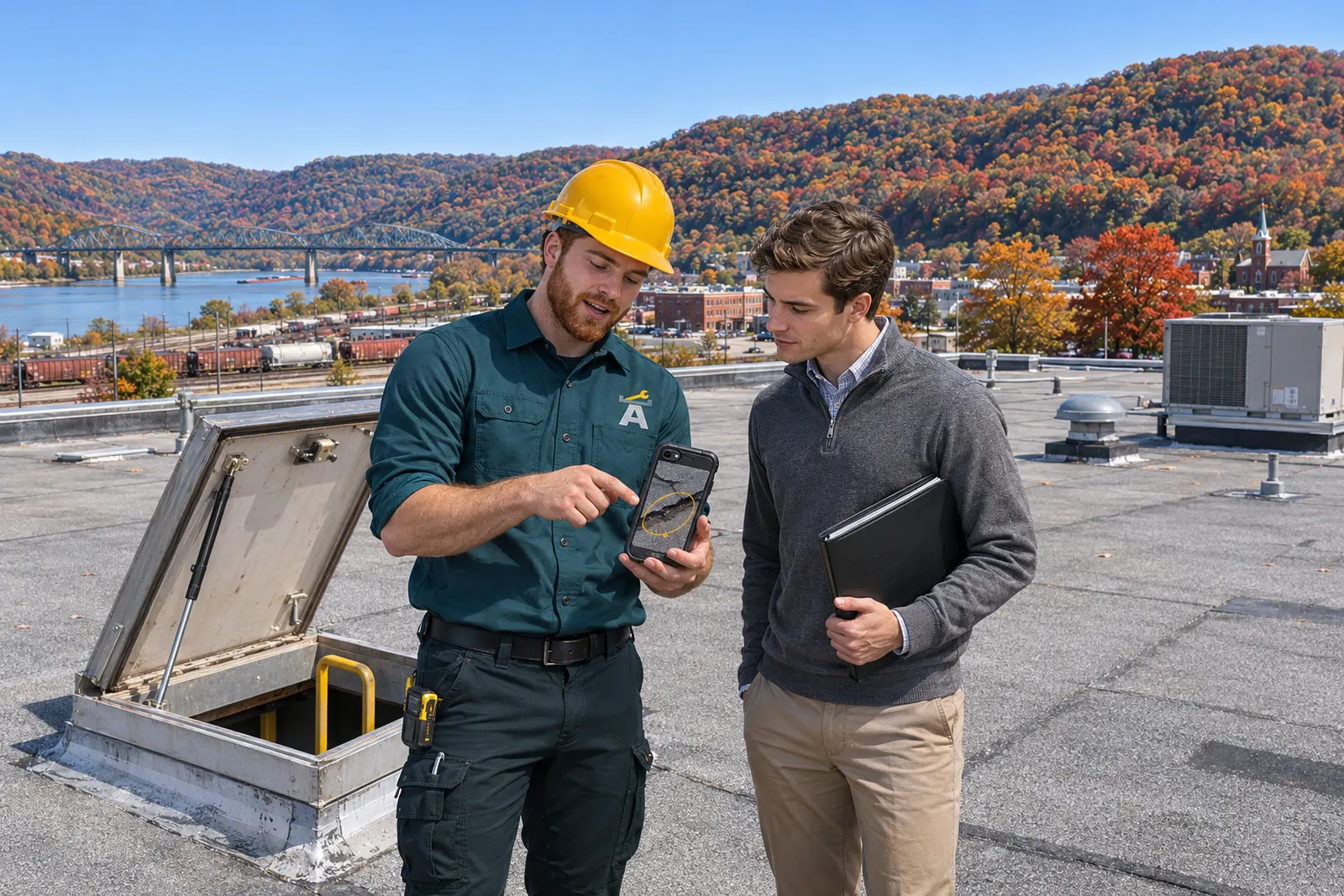
We provide commercial roof repair services in Ashland for membrane, metal and plant roofs, each repaired with materials that match what is already up there.
Our commercial roof repair services in Ashland start with the roof system. Pick the one that matches your building, or call and describe what you see.
Low-slope membranes with open laps, blisters, ponding rings at drains and punctures beside rooftop units.
Flat Roof Repair in Ashland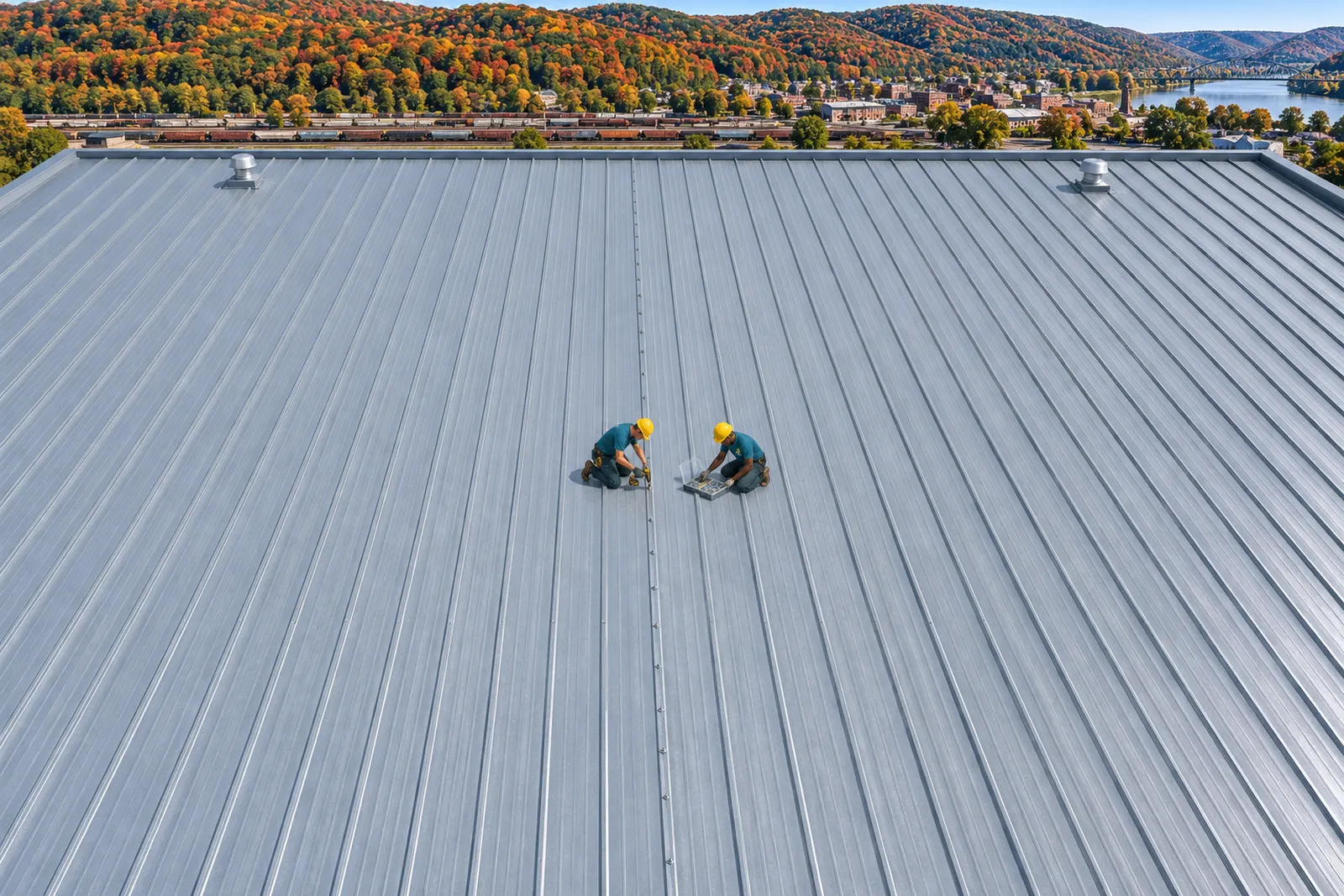
R-panel and standing seam buildings with loose screw rows, leaking end laps, rust at eaves and gutter leaks.
Commercial Metal Roof Repair in Ashland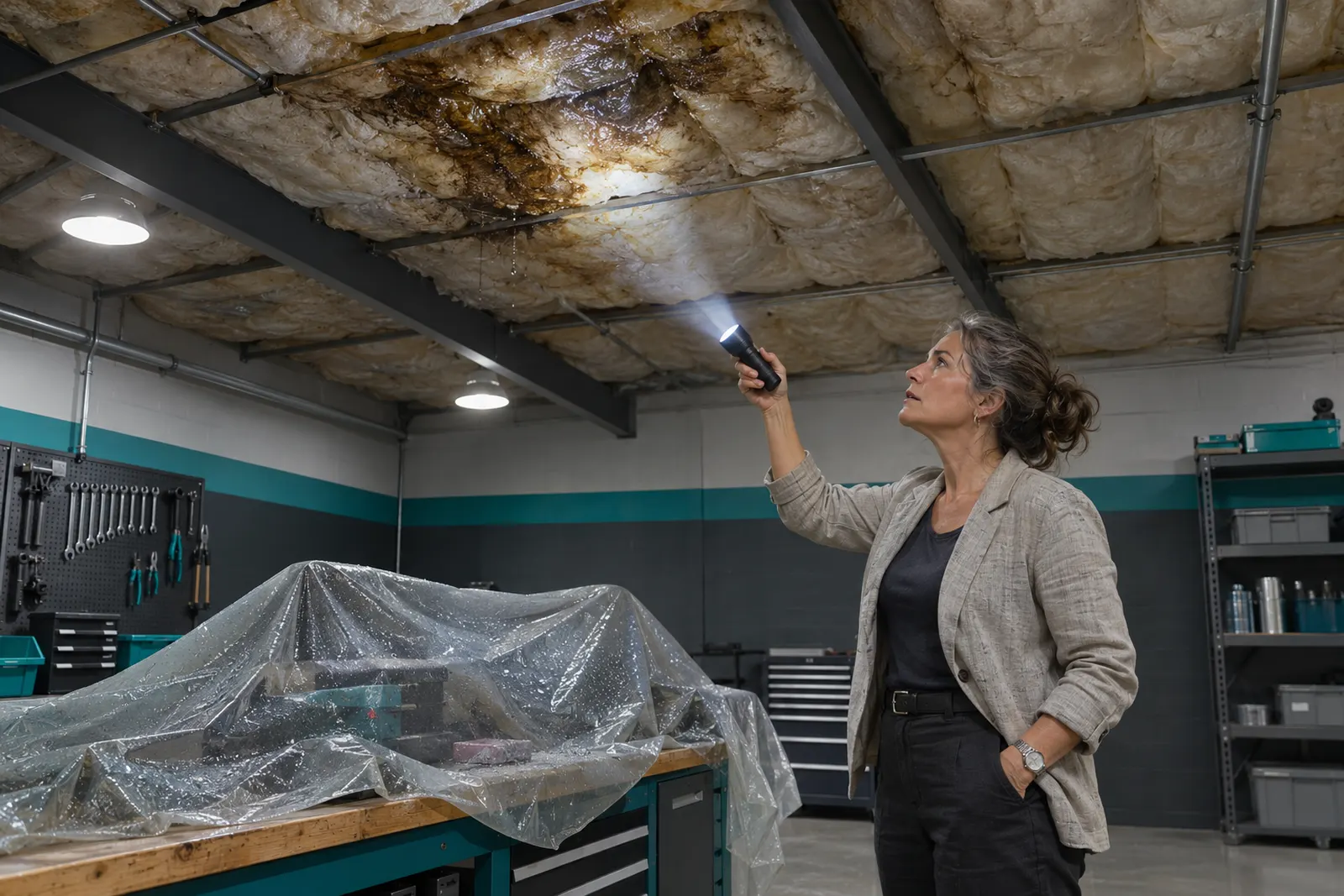
Stains on ceiling tile, drips over racks and water at skylights traced back to the seam or curb behind them.
Commercial Roof Leak Repair in Ashland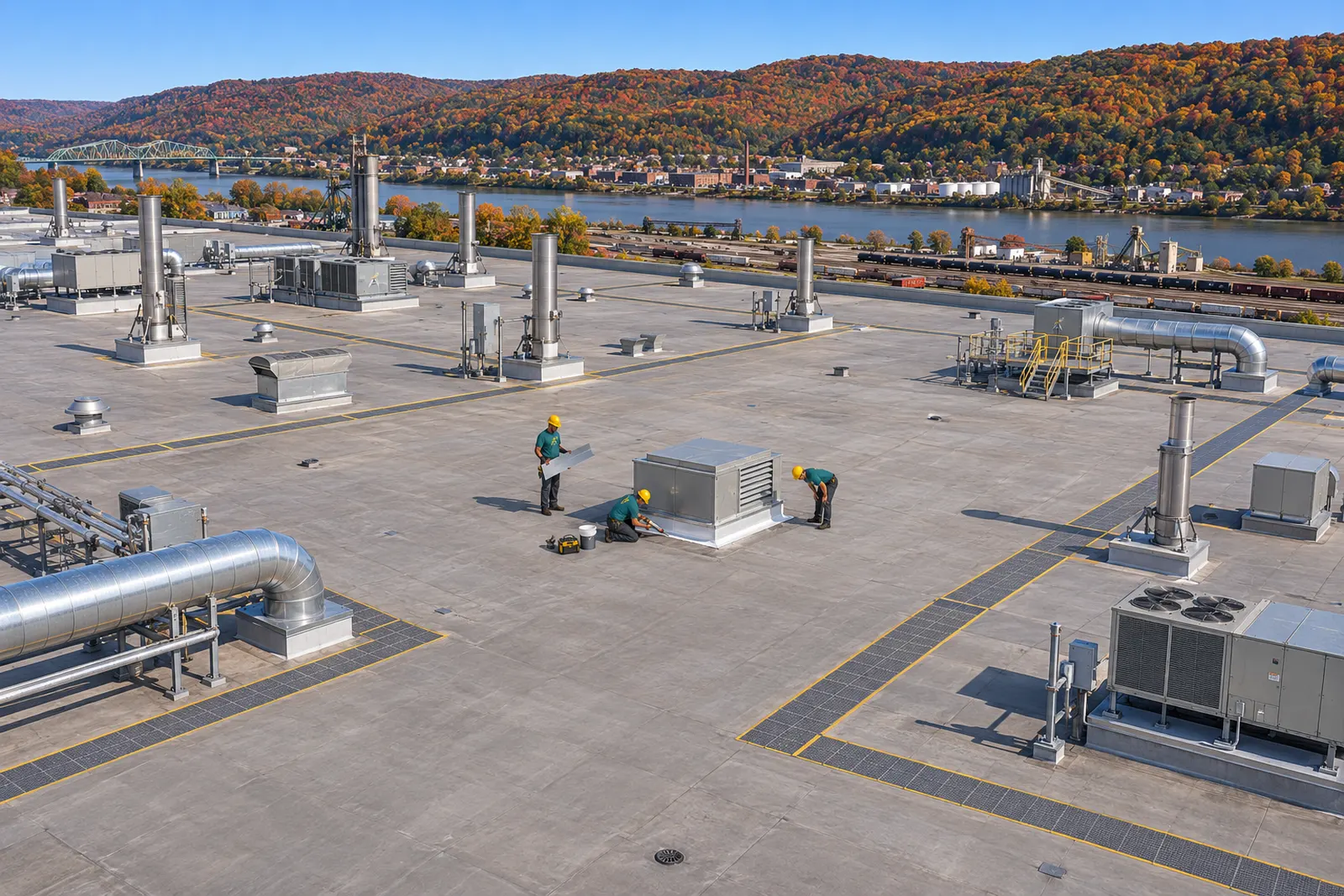
Plant and warehouse roofs with fan residue, worn service paths, wet insulation and storm damage at edges.
Industrial Roof Repair in AshlandThe roof on your building decides the patch, the primer and the tool. This table shows how each system gets repaired.
| Roof System | Where It Leaks First | How We Repair It | Service |
|---|---|---|---|
| TPO or PVC | Seam welds, corners, curb flashing, drain clamps | Clean oxidized sheet, hot-air weld a matching patch | Flat roof repair |
| EPDM | Seam tape, T-joints, pipe boots | Prime and roll a peel-and-stick patch with round corners | Flat roof repair |
| Modified bitumen or built-up | Lap edges, blisters, bare gravel spots | Cut and dry blisters, cap patch or new plies | Flat roof repair |
| R-panel or standing seam steel | Screw washers, end laps, ridge closures | Oversized screws, butyl tape, stitch screws, panel sections | Metal roof repair |
| Any roof over a plant | Fan curbs, service routes, wet insulation | Section tear-out to the deck and tie-in | Industrial roof repair |
A small test cut identifies an unknown membrane before any patch material is ordered. Book the inspection and we will tell you what is up there.
The steps stay the same whether the roof is a TPO warehouse or a steel shop. Only the materials change.
A walk from the leak inside to the roof above, then upslope through curbs, laps and drains until we find where water enters.
Dry insulation and local damage mean repair. Wet boards over wide areas move the talk to restoration or replacement.
Welded patches for thermoplastics, primed patches for rubber, cap sheets for mod bit and fasteners and tape for steel.
Suspect areas get tested one at a time, and each repair goes on a dated roof plan you keep.
What owners ask most when deciding between a repair and something bigger.
Repair is enough while damage sits in specific spots and the insulation stays dry. Restoration adds a coating system over an aging but dry surface with many small failures.
Replacement comes in when wet boards cover wide areas or the deck has rotted. A moisture survey or core cut decides which path fits.
Once leaks appear in new spots every season, wet insulation spreads, or the membrane turns brittle so patches will not bond, repair money goes into a roof that keeps failing. Rusted-through panels in many places point the same way. A survey with core cuts shows whether restoration or replacement fits.
It becomes reroofing when the work replaces or recovers a large area instead of fixing spots: new membrane over a whole section, new insulation and deck across a wide area, a new layer over the old one, or a change in slope.
DHBC lists the 2018 Kentucky Building Code, based on the 2015 IBC. Ask the local office how it classifies the job first.
Roof drawings, leak history and building hours help most. The roof type and age tell the crew which materials to load, leak history points to repeat spots, and a list of sensitive areas inside lets them protect equipment before cutting. Clear access to the hatch or ladder saves time on day one.
Pick a service or tell us what the roof is doing. The first visit is an inspection of the spot that leaks.