Refasten and Patch
- Screws
- Raised heads or worn washers along eaves and ridge
- Laps
- Dried butyl tape with solid steel
- Rust
- Surface rust or pinholes at fasteners
- Purlins
- Straight and solid under the panel
- Work
- Wire brush, prime, seal, retape, refasten
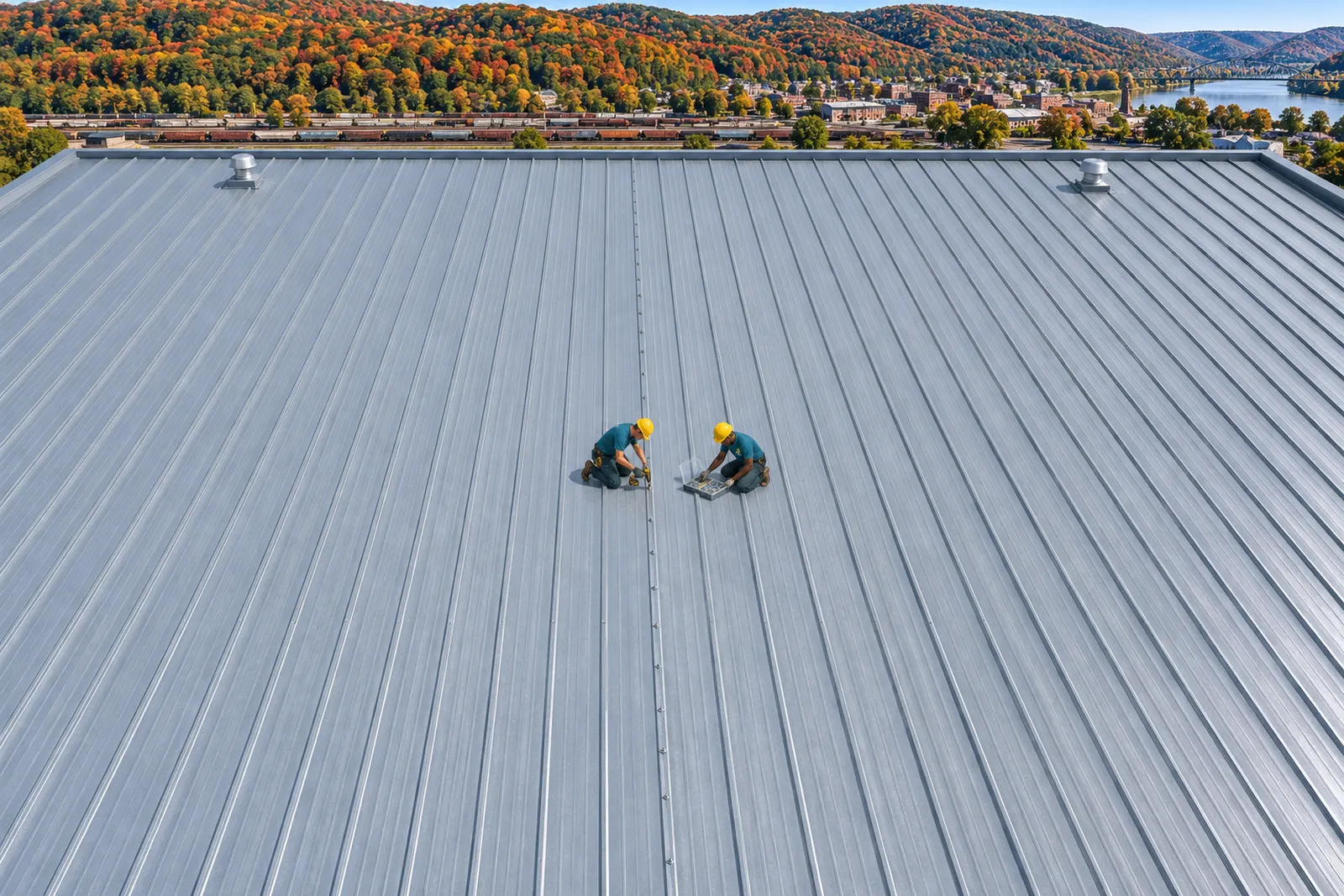
As an Ashland commercial metal roof repair contractor, we replace loose screws, retape end laps and swap rusted panels on steel buildings.
An Ashland commercial metal roof repair contractor decides by the steel itself. Surface rust over solid metal gets patched, while rust through both panels at a lap means new steel.
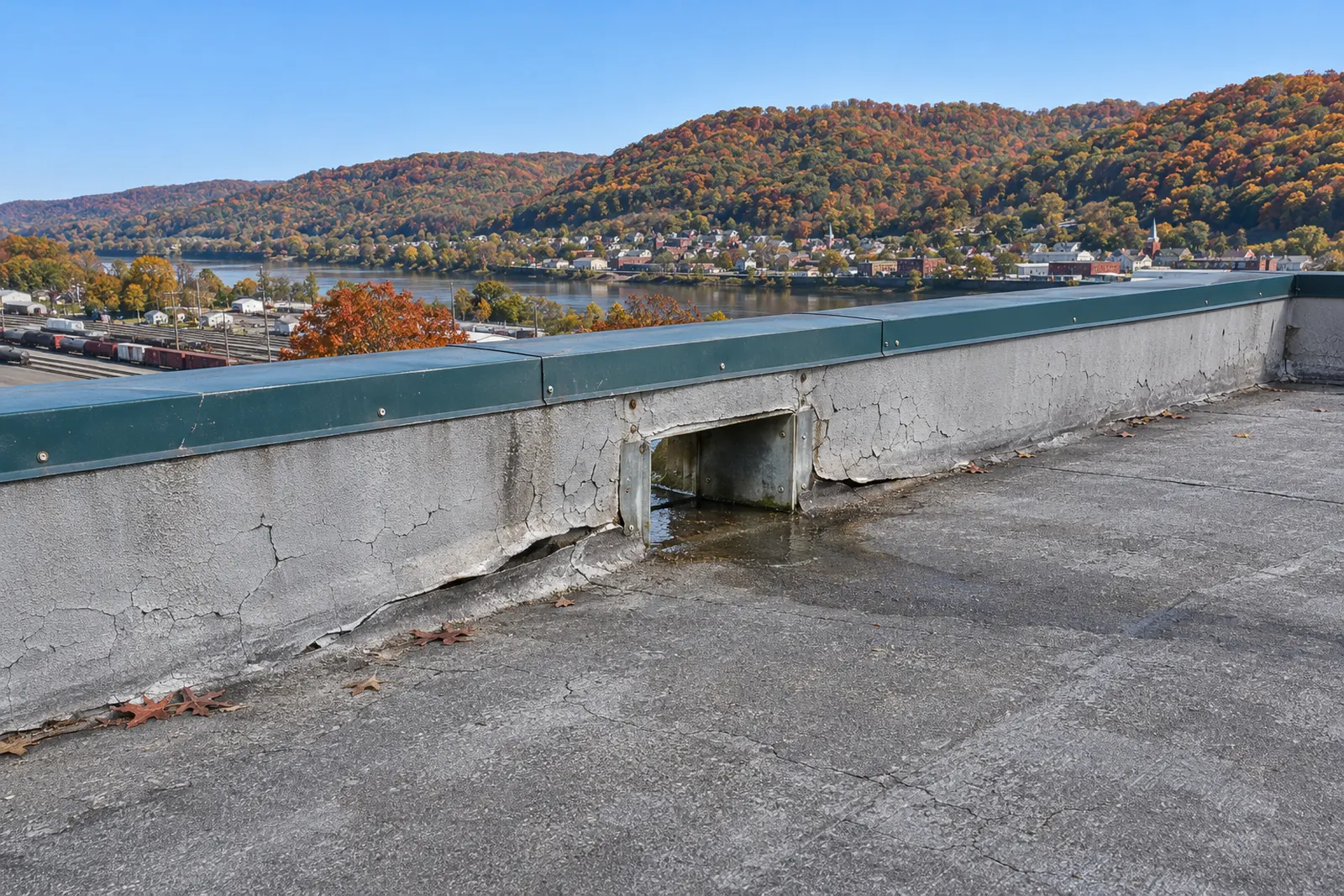
Steel roofs leak at fasteners, laps and trim, because those are the spots that move every day as the panels heat and cool.
Daily expansion works screws loose and wears out their rubber washers. A raised head leaves a gap at the washer that sends water down the threads, and on big R-panel roofs whole rows near the eaves and ridge go at once.
Usually Means: Oversized screws with new washers, snugged so the washer seals without flattening.
Missing or dried butyl tape lets water cross the lap on its way to the eave.
Debris and moisture sit at the lower panel ends, so rust starts there and at screw holes.
Split sealant at end caps and sagging hangers hold water against the panel ends.
Translucent panels set into steel roofs crack with age and hail and leak at their laps.
Metal repairs use screws, tape, sealant and sheet metal. These are the repairs we make most on steel buildings.
Each screw line is walked and marked, stripped holes get oversized screws and every new screw gets a fresh washer.
Old sealant comes out, new butyl tape goes in, stitch screws pull the lap tight and seam sealer covers the joint.
Wire-brushed and primed steel gets a sheet metal or fabric patch over pinholes at laps and fasteners.
End caps resealed, hangers reset and foam closures replaced under the panel ends at the eave.
Rusted-through panels come out and same-profile steel goes in, after any rusted purlin under it is repaired.
Metal roofs reward early repair because one loose row leads to the next.
New screws and fresh butyl tape stop panels from working loose at the overlap. A tight lap keeps water from reaching the purlins, so the structure under the roof stays straight and the repair stays a panel job.
Primed and sealed pinholes stop rust before it eats through both panels at a lap.
Resealed gutters and new closures keep winter ice from backing water under panel ends.
Fewer drips over racks and machines inside shops and warehouses.
A line of drips under one panel run usually traces to a row of worn washers. We walk the screw lines and replace the ones that failed.
Metal roof repairs follow screw lines and laps from the eave up.
We walk each screw line from the eave, mark raised heads and worn washers, and check every lap and closure near the leak.
Stripped screws come out and oversized screws with new washers go in, snugged without crushing the washer.
Old sealant is cleaned out, butyl tape replaced and stitch screws added to close each lap.
Pinholes get primed and patched, and rusted-through panels are replaced with matching profile steel.
Metal buildings often need more than fastener work.
Drips on cold mornings without rain can be condensation, and we rule that out before patching anything.
Commercial Roof Leak Repair in AshlandFlat additions and office wings on steel buildings get membrane repairs during the same visit.
Flat Roof Repair in AshlandSteel plant roofs with exhaust fans and process vents need repairs planned around production.
Industrial Roof Repair in AshlandFasteners, laps and rust come up on almost every metal building we see.
Steel panels grow in the heat and shrink in the cold every day, and that movement slowly works screws loose and wears out washers. We remove stripped screws, drive oversized ones with new washers, snug them so the washer seals and seal any head with rust around the hole.
We clean the overlap, replace dried sealant or butyl tape and add stitch screws to pull the panels tight. Reinforced seam sealer goes over the joint. End laps leak most because water crosses them headed to the eave, and laps rusted through both panels need a new section.
Surface rust on solid steel gets wire brushed, primed and sealed. Pinholes at laps and screws get a sheet metal or fabric patch. Rust-through across a panel means replacing it, and rusted purlins get repaired before new panels go on. Gutters and eaves rust first, so we check them whenever a nearby panel is replaced.
Gutter seams and end caps get resealed, sagging hangers reset, and failed foam closures under the panel ends replaced. Panels that stop short of the gutter let water run behind it. Clearing gutters before cold weather keeps ice from backing water under the panels.
Metal repair centers on screws, laps and trim using screw guns, nibblers, butyl tape and sheet metal. Membrane repair centers on seams and adhered patches using hot-air welders, primers and rollers. A metal plant with a flat office addition needs both on the same visit.
Both, at the scale of a repair. We replace rusted panels and sections with matching steel, install new closures and trim, and set up a maintenance walk of the screw lines each year so loose rows get caught early.
Send a photo of the panels or the drip and tell us the building type. We will walk the screw lines and laps first.