
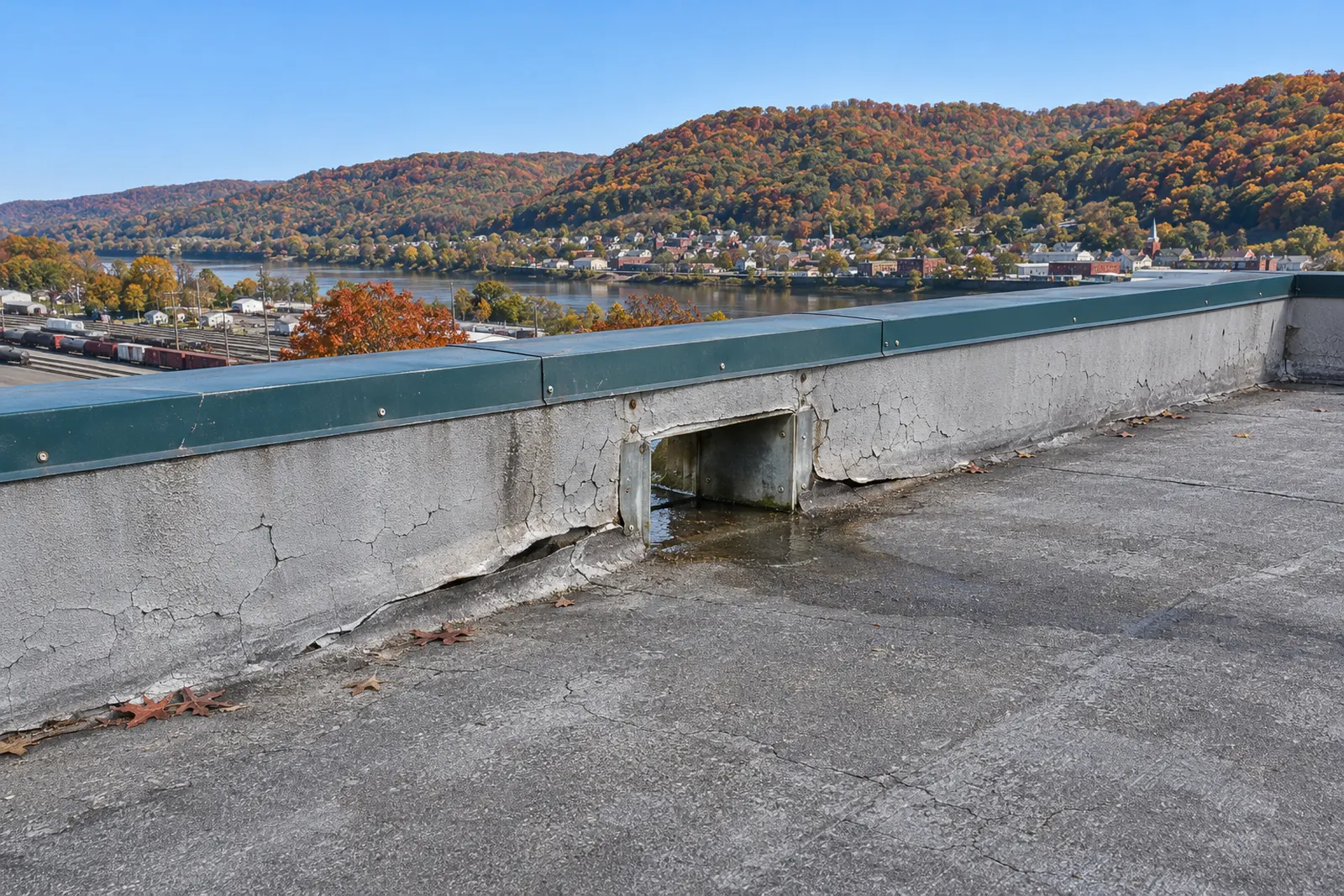
Roof Leak
- Timing
- During or after rain
- Pattern
- One stain that grows in one area
- Location
- Under seams, curbs, drains or skylights
- Roof
- An open lap, crack or loose flashing above
- Fix
- Repair the entry point on the roof
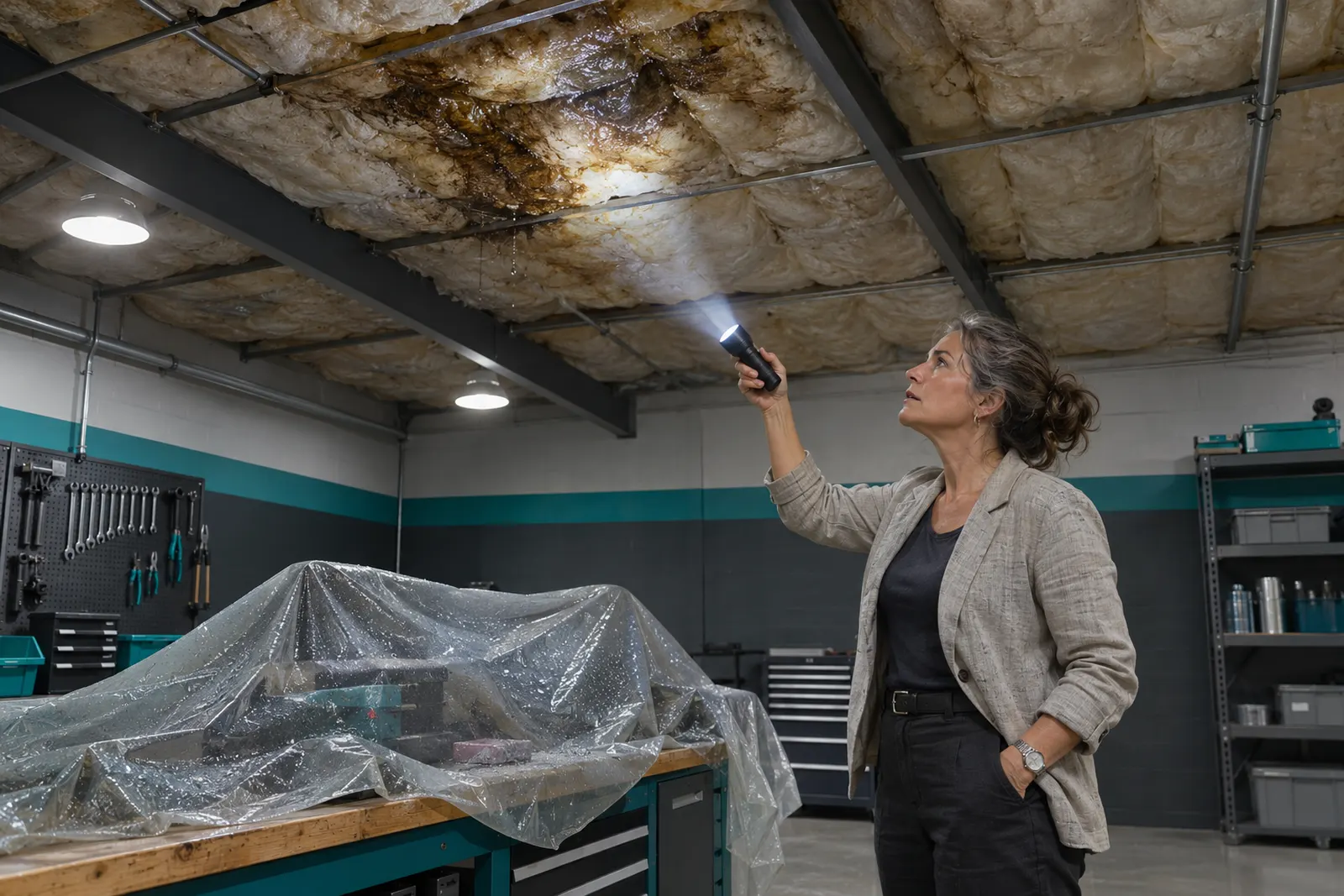
As an Ashland commercial roof leak repair contractor, we follow water from the ceiling stain to the curb, lap or skylight letting it in.
The first job of an Ashland commercial roof leak repair contractor is ruling out condensation. Warm, damp indoor air drips off cold steel on winter mornings even under a dry roof.
Water travels along deck flutes, board joints and purlins before it drips. The source is usually several feet from the stain.

Anything that cuts through the roof depends on flashing and sealant that wear out sooner than the membrane. Vibration from the unit pulls curb flashing loose, and pitch pan sealer shrinks away from the support it surrounds.
Usually Means: Pitch pans refilled; loose curbs stripped and reflashed with matching membrane.
Worn gaskets and failed curb flashing let water in around the frame.
Cracked coping joints and open masonry put water in the wall, and it shows up inside as a roof leak.
TPO welds open at corners, and EPDM seam tape lets go at T-joints.
Water dams on the upslope side of a large curb with no cricket to split it.
Once the source is found, the repair matches the detail that failed.
Loose flashing is stripped and new matching membrane is run up the curb and terminated under the counterflashing.
Shrunken sealer is cleaned out and the pan refilled so it seals tight around the pipe or support.
Gaskets replaced and curb flashing redone around the skylight frame.
Coping joints resealed and cleats reset so water stays out of the parapet.
The open lap that started it all gets cleaned and welded, primed or taped to match the roof.
Fixing the entry point once beats patching the wrong spot three times.
Tracing upslope and water testing one spot at a time means the patch lands on the detail that actually failed. Owners stop paying for repeat visits to the same stain, and two separate leaks are never mistaken for one.
Water stops reaching ceiling tile, racks and equipment below.
Short leaks leave insulation dry enough to stay in place.
Photos and a marked plan show where each leak came from.
A temporary cover holds water off stock and equipment now. The permanent repair follows once the roof is dry and warm enough for patches to bond.
Leak tracing starts inside and moves up and upslope.
We mark the interior stain, measure it to a wall or column and find the same spot on the roof.
Every curb, pipe, seam and drain upslope from that spot gets checked and probed.
Suspect areas get water one at a time, starting downslope, so two leaks never look like one.
The failed detail is repaired with matching materials, and a temporary patch comes off if one went on first.
The source of a leak decides which repair comes next.
Open laps, blisters and punctures on low-slope membranes get patched with the method that sheet takes.
Flat Roof Repair in AshlandWorn washers and dry end laps on steel get new screws, tape and stitch screws.
Commercial Metal Roof Repair in AshlandLeaks over production lines get repaired with drip pans and plastic set below first.
Industrial Roof Repair in AshlandWhat owners ask while water is still coming in.
We mark the stain inside and measure it to a wall or column, find that spot on the roof and check every curb, pipe, seam and drain upslope. Seams get probed, flashing terminations checked, and suspect areas water tested one at a time starting downslope.
TPO and PVC leak at welds, corners, curb flashing and drain clamps. EPDM leaks at seam tape, T-joints and pipe boots. Mod bit leaks at lap edges and blisters, built-up roofs at bare gravel spots, and metal at screw washers, end laps and skylight panels. Parapets get checked on every type.
Yes. On cold mornings warm indoor air turns to water on the underside of the deck or panels and drips, often across many spots and with no rain. Shops with bare steel and buildings with wash-down areas see it most. Insulation and ventilation fix it, and a roof patch does nothing.
They cut through the roof and rely on flashing and sealant that wear out before the membrane. Unit vibration loosens curb flashing, pitch pan sealer shrinks, skylight gaskets crack and condensate lines wear the surface. A large curb with no cricket also holds water against its upslope side.
When water is coming in during rain or cold weather and the real repair needs a dry, warm surface. Roof cement and fabric over a split seam, tape over an open metal lap or a weighted tarp holds it off. Each temporary spot gets marked and dated, and the permanent repair follows when the forecast clears.
A temporary repair uses cement, tape or a tarp applied wet or cold to stop water for now. A permanent repair cleans, primes and cuts back the damaged layers, then welds or adheres matching membrane on a dry surface so it becomes part of the roof. Mastic on a TPO seam still needs a welded patch later.
Photograph the stain, note when it showed up and what the weather was. We will trace it to the source.