
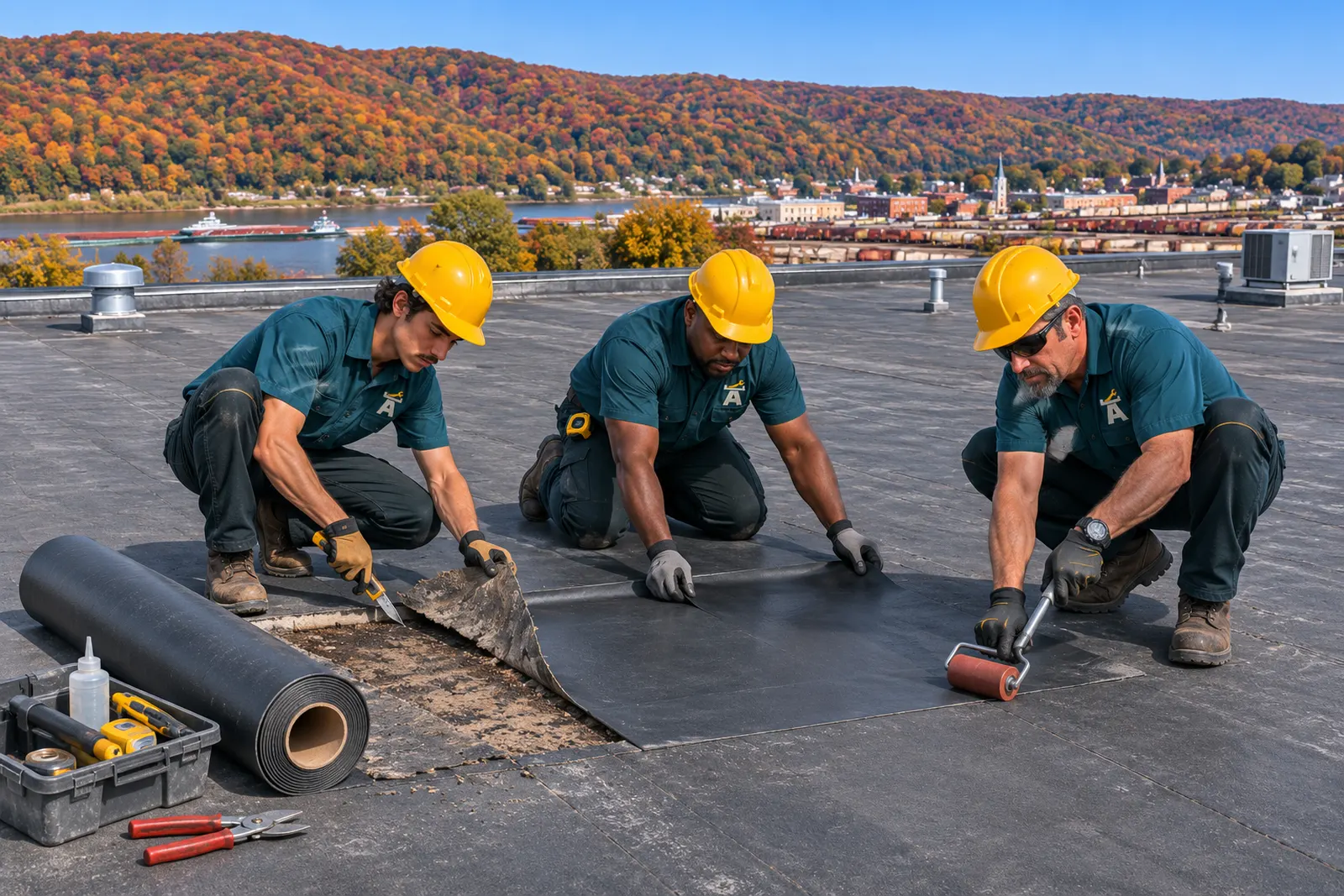
Section Rebuild
- Wet Area
- A few bays confirmed by core cuts
- Deck
- Steel flutes solid or plated where rusted
- Work
- Cut out to the deck, new boards and membrane
- Tie-In
- Welded or taped to the existing roof
- Plant
- Lines keep running below
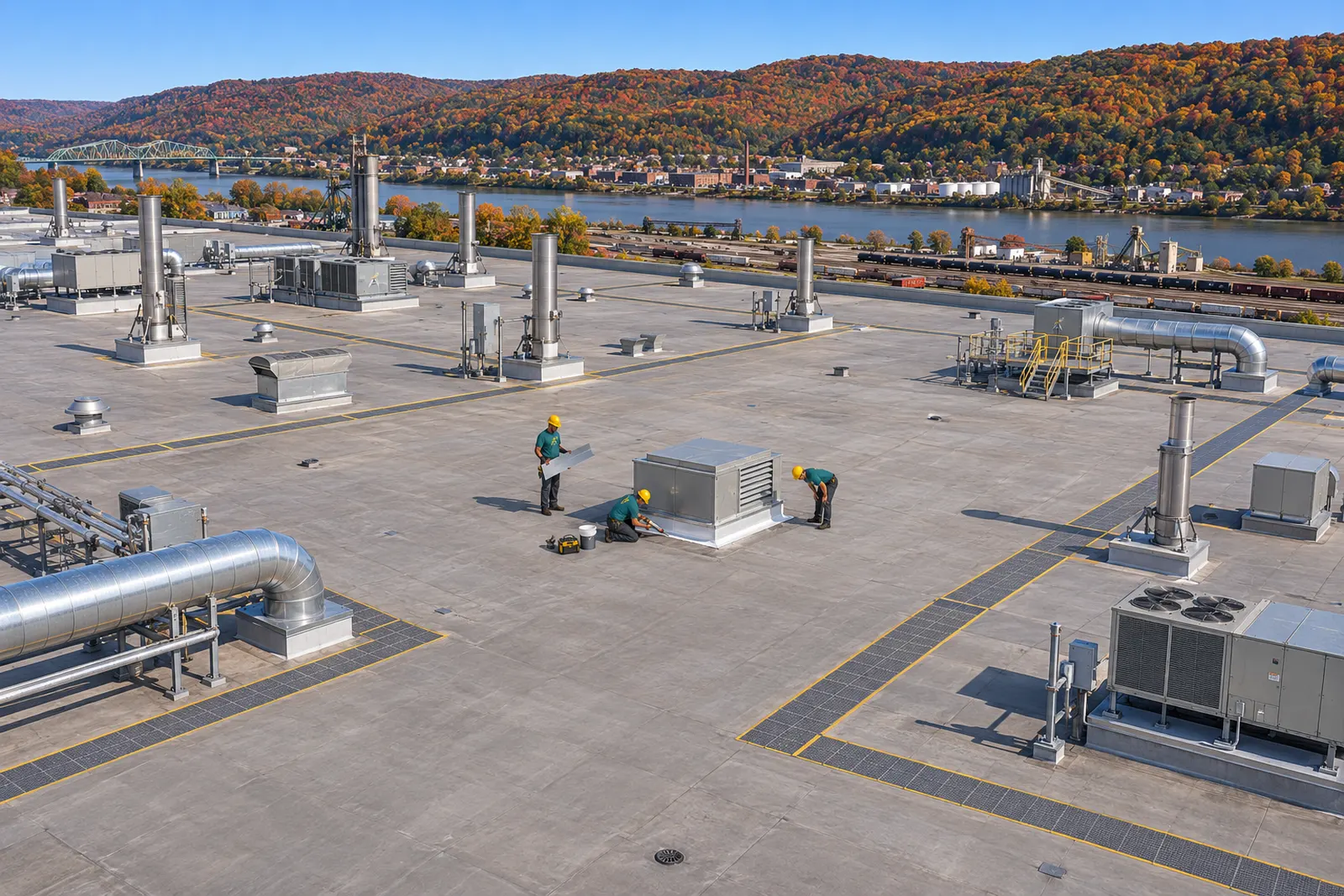
As an Ashland industrial roof repair contractor, we repair plant and warehouse roofs from above while production keeps running underneath.
An Ashland industrial roof repair contractor maps the wet areas before choosing. A few soaked bays get rebuilt as sections, while wet boards across a large share of the roof make replacement cheaper over time.
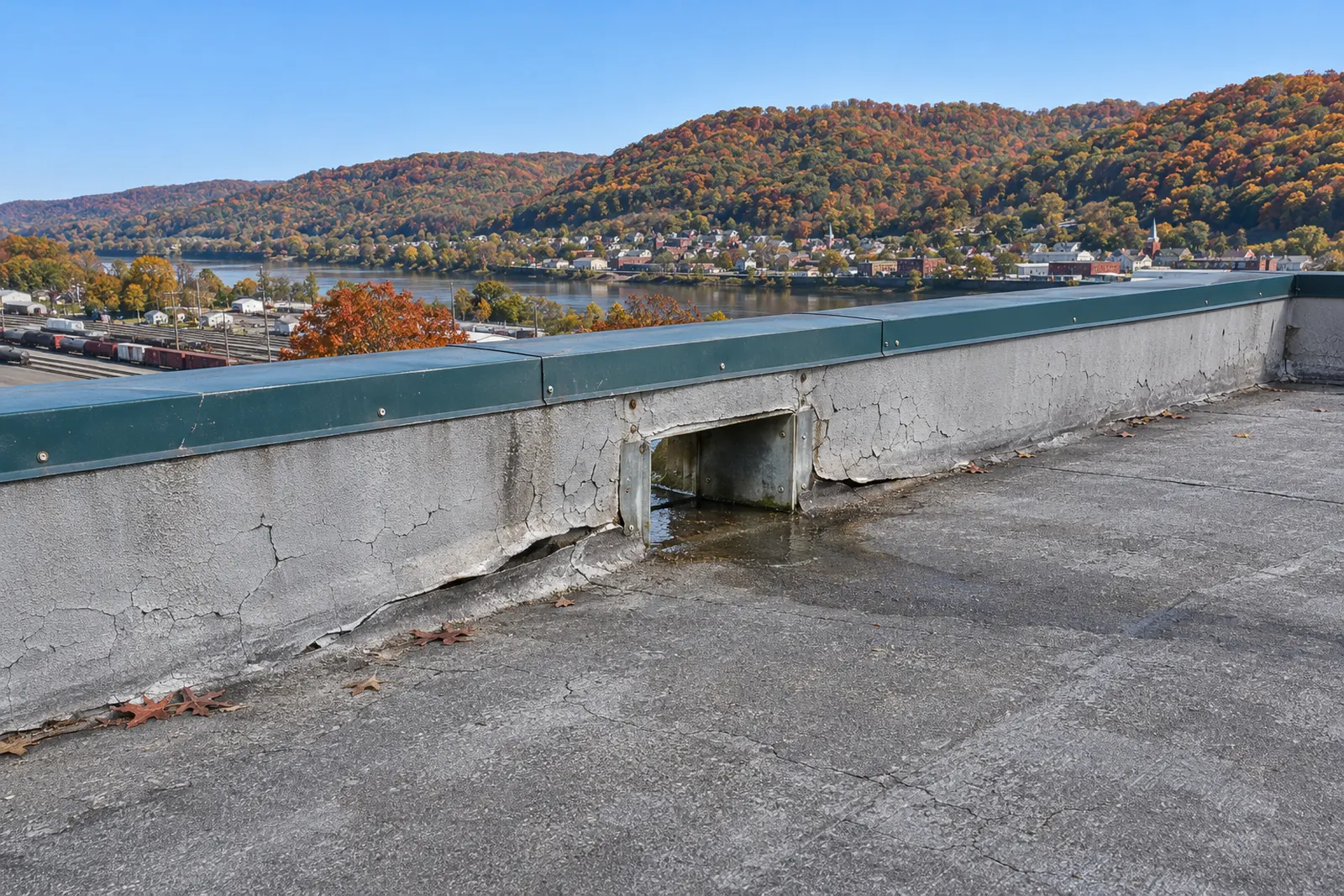
Plant roofs carry more equipment and more foot traffic than any other commercial roof. The damage follows both.
Kitchen and process exhaust drops grease, oil and chemical residue that softens, swells or cracks some membranes. The damage spreads out in a ring from the fan, and residue also clogs nearby drains.
Usually Means: Damaged sheet cut out and replaced with membrane rated for that exposure.
Paths between hatches and units wear first under boots, dropped tools and screws from HVAC work.
Soaked boards under an intact-looking membrane keep rusting the deck and feeding leaks.
Unpadded legs and pipes resting on membrane cut through it over time.
Wind and hail hit edges, corners and rooftop equipment first on a large roof.
These repairs cover most plant and warehouse roofs we see.
Soft membrane around fans is cut out and replaced with sheet rated for the exposure, such as PVC near grease, with a containment box at the fan.
Membrane, insulation and cover board removed to the deck, flutes checked, new boards and membrane tied in.
Pads along regular service routes and supports that lift pipes and conduit off the sheet.
Rubber pads or flashed curbs under each leg of equipment resting on the roof.
Lifted edge metal and torn corners repaired first so the next wind does not peel the roof further.
Plant roofs carry production below them, so repairs pay back in more than dry boards.
Repairs scheduled with plant maintenance work around shutdown windows. Drip pans and plastic go under any cutting over sensitive equipment, and material lifts are placed so loading docks stay open.
Wet sections removed before rust spreads across the steel flutes.
Residue-rated membrane and containment boxes stop the same failure at the fan.
Tracking where punctures show up each year shows which routes need walk pads.
Tell us where the water lands and what sits under it. We set protection below before cutting and plan the work around your line schedule.
Plant repairs start with a plan agreed with maintenance.
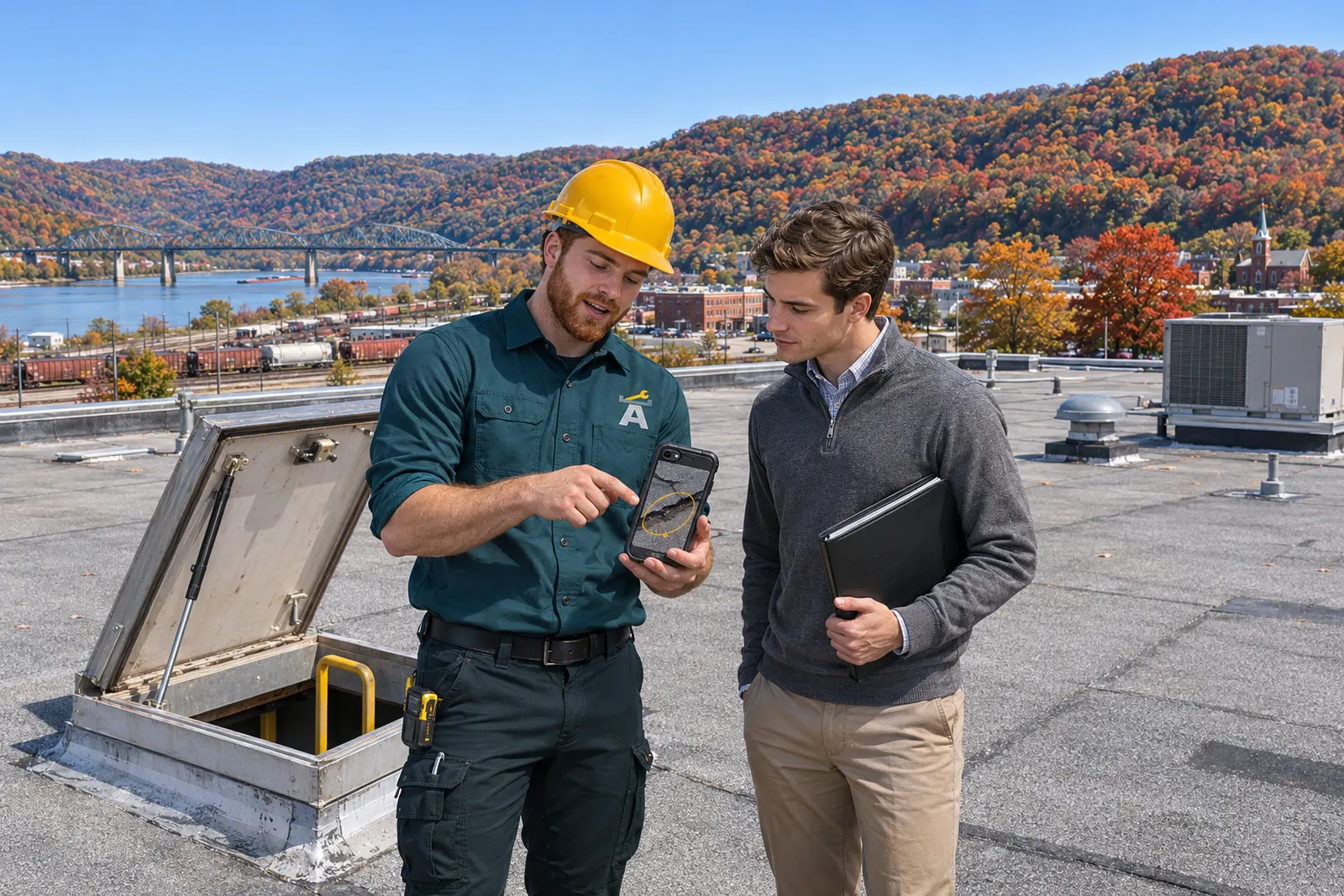
We walk the roof with plant maintenance, note fan curbs, service routes and edges, and mark leak areas.
Infrared or a moisture meter grid shows wet boards, confirmed with core cuts at each area's edges.
Drip pans and plastic go below, permits and shutdowns are lined up and lifts are placed clear of docks.
Sections are rebuilt to the deck or patched, then welded or taped into the existing roof.
Industrial buildings often carry more than one roof system.
Steel plant roofs need screw lines and end laps repaired along with any fan curb work.
Commercial Metal Roof Repair in AshlandLeaks over lines get traced from the stain so the right curb or lap gets repaired.
Commercial Roof Leak Repair in AshlandLow-slope membranes on warehouses get seam, blister and drain repairs.
Flat Roof Repair in AshlandPlant managers ask about scheduling, residue and storms.
We work outside while operations run below, coordinated with plant maintenance. That means hot work permits near process areas, RTU and fan shutdowns for curb work, keeping adhesive odor away from air intakes, lifts that leave docks open and warning lines at edges.
Residue from kitchen and process fans softens, swells or cracks some membranes in a ring around the fan, blisters areas downwind and clogs drains with grease. The fix is cutting out the damaged sheet, replacing it with membrane rated for the exposure and adding a containment box at the fan.
Wet areas are mapped with infrared or a moisture meter grid and confirmed with core cuts. Membrane, insulation and cover board come off down to the deck, rusted flutes get plated, and new boards and membrane are tied into the old roof. If wet areas cover a large share, replacement costs less over time.
Foot traffic, dropped tools, screws and scraps from HVAC work, hail and equipment legs resting on the sheet. Walk pads on regular routes, pipe supports, leg pads and a roof sweep after each service visit cut punctures down. A yearly puncture map shows where pads are needed.
Every air intake and makeup air unit is located before work starts, and we stage adhesives and primers downwind of them. Where a repair sits close to an intake, the unit is shut down with plant maintenance for the hours the adhesive cures, or a welded membrane that needs no adhesive is used instead.
Edges, corners, rooftop equipment and drains first. Look for lifted edge metal and coping, torn or billowing membrane at corners, shifted RTU panels and exhaust caps, hail marks and blocked scuppers. Dated photos help claims, and edge damage gets fixed first.
Tell us what the plant makes, where water lands and when lines can pause. We will plan the inspection with your maintenance team.