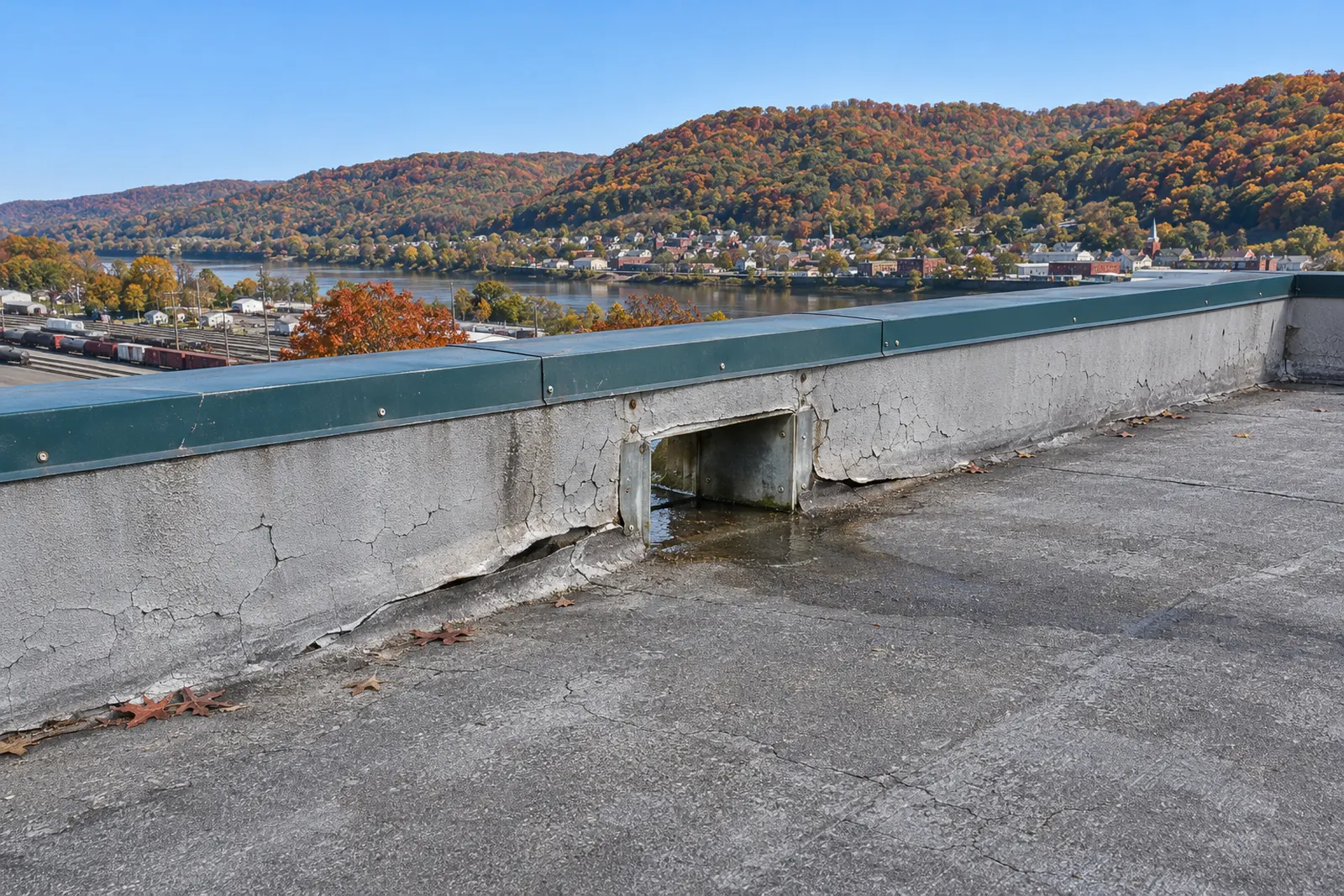
Worn flat commercial roof membrane with open seams in Ashland, KY
TPO, PVC, EPDM, Mod Bit, BUR

Ashland Flat Roof Repair Contractor

Close Split Seams and Patch Punctures in Flat Roof Membranes

As an Ashland flat roof repair contractor, we weld, prime and cap patches on low-slope membranes so seams, blisters and drains stop letting water in.

  • SeamsProbed End to End
  • PatchesMatched to the Membrane
  • DrainsCleared Before Seam Work

Is This Flat Roof a Fit for Repair?

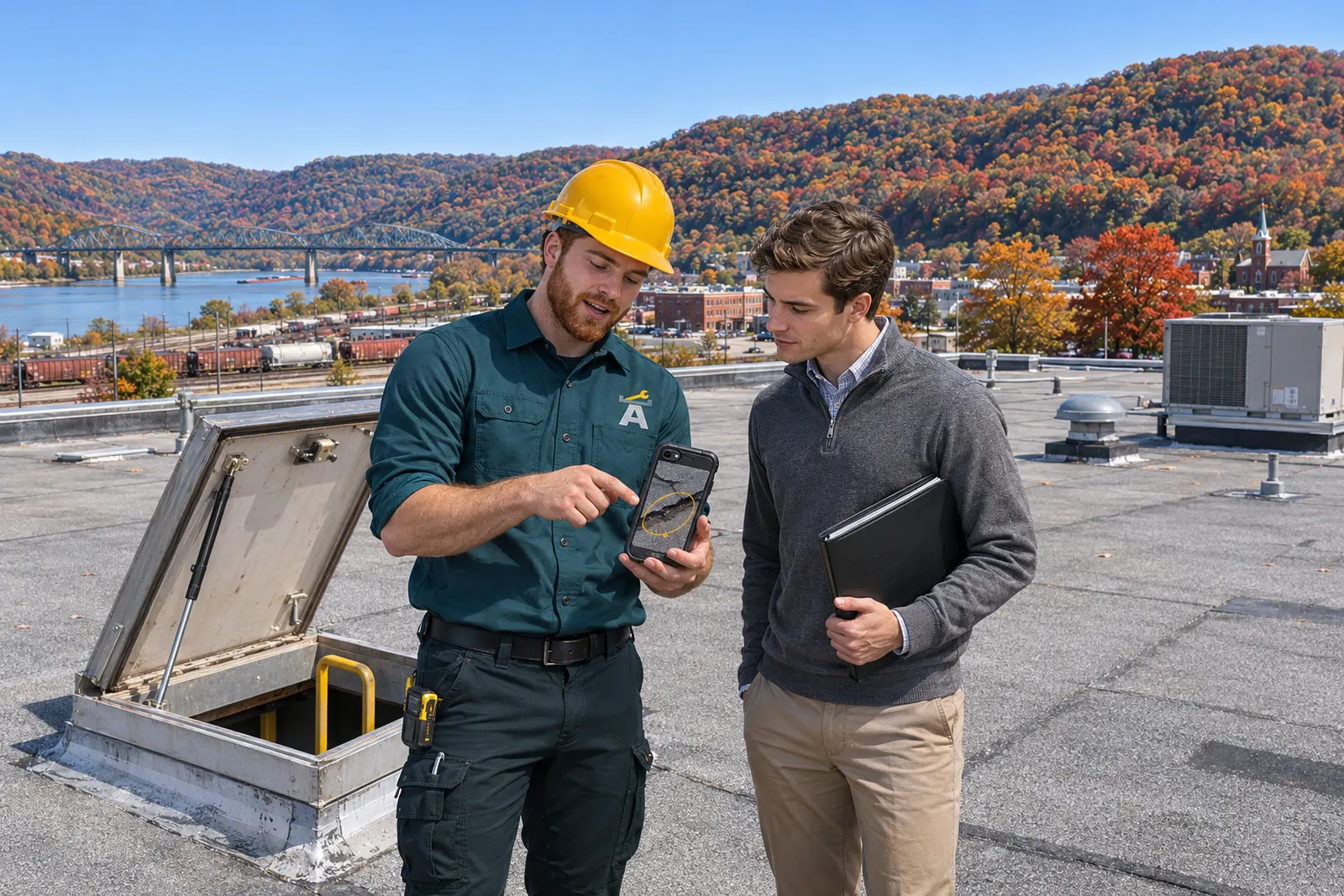
An Ashland flat roof repair contractor looks first at the boards under the sheet. Dry insulation with damage in a few spots keeps the roof on the repair side.

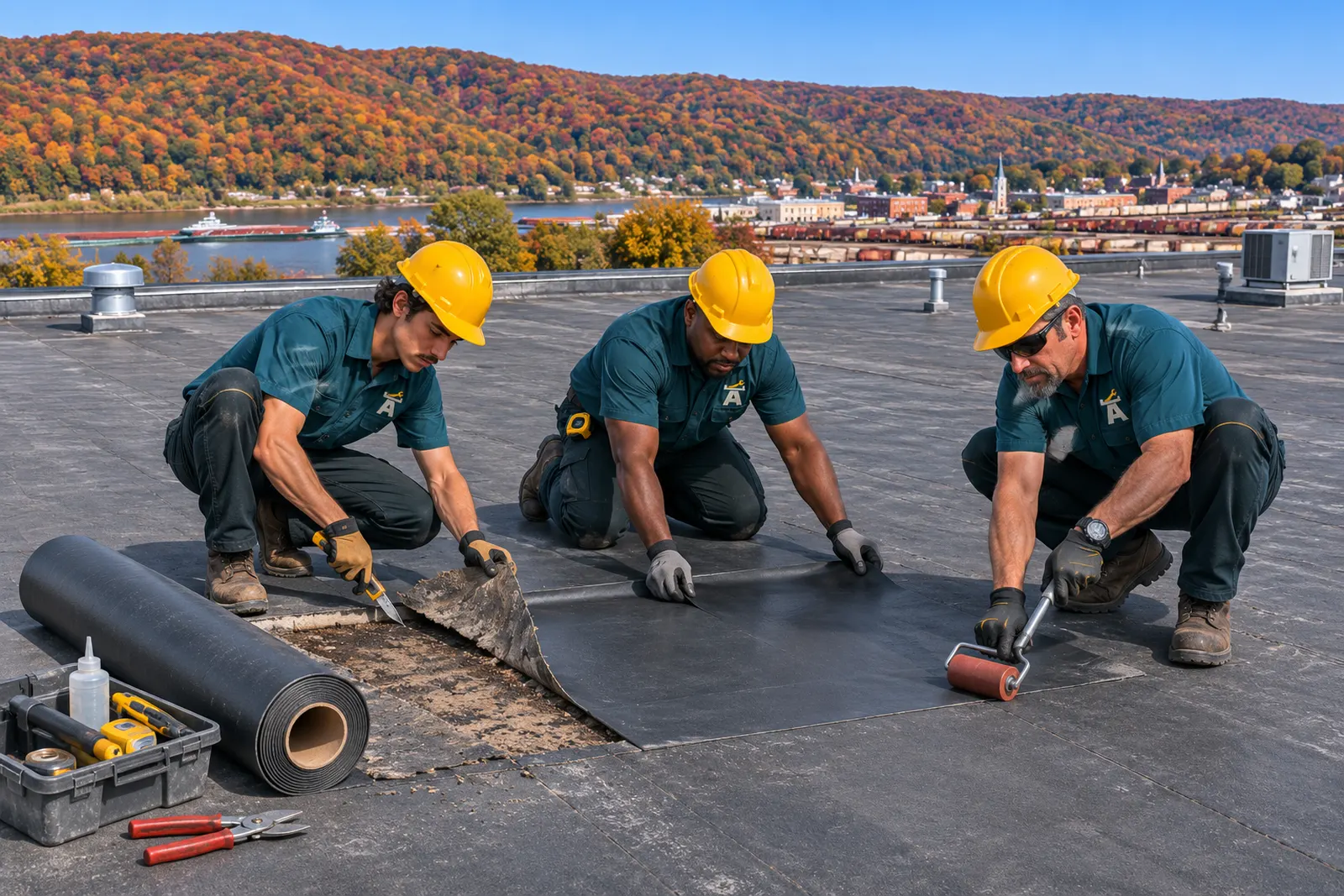
Roofer welding a TPO patch over an open lap on a flat roof

Patch and Reseal

Seams
One or two open laps, often at drains or T-joints
Blisters
Firm and few, or one soft one near a leak
Insulation
Dry when pressed around the damage
Ponding
One clogged drain or a sunken spot
Membrane
Still flexible enough for a patch to bond
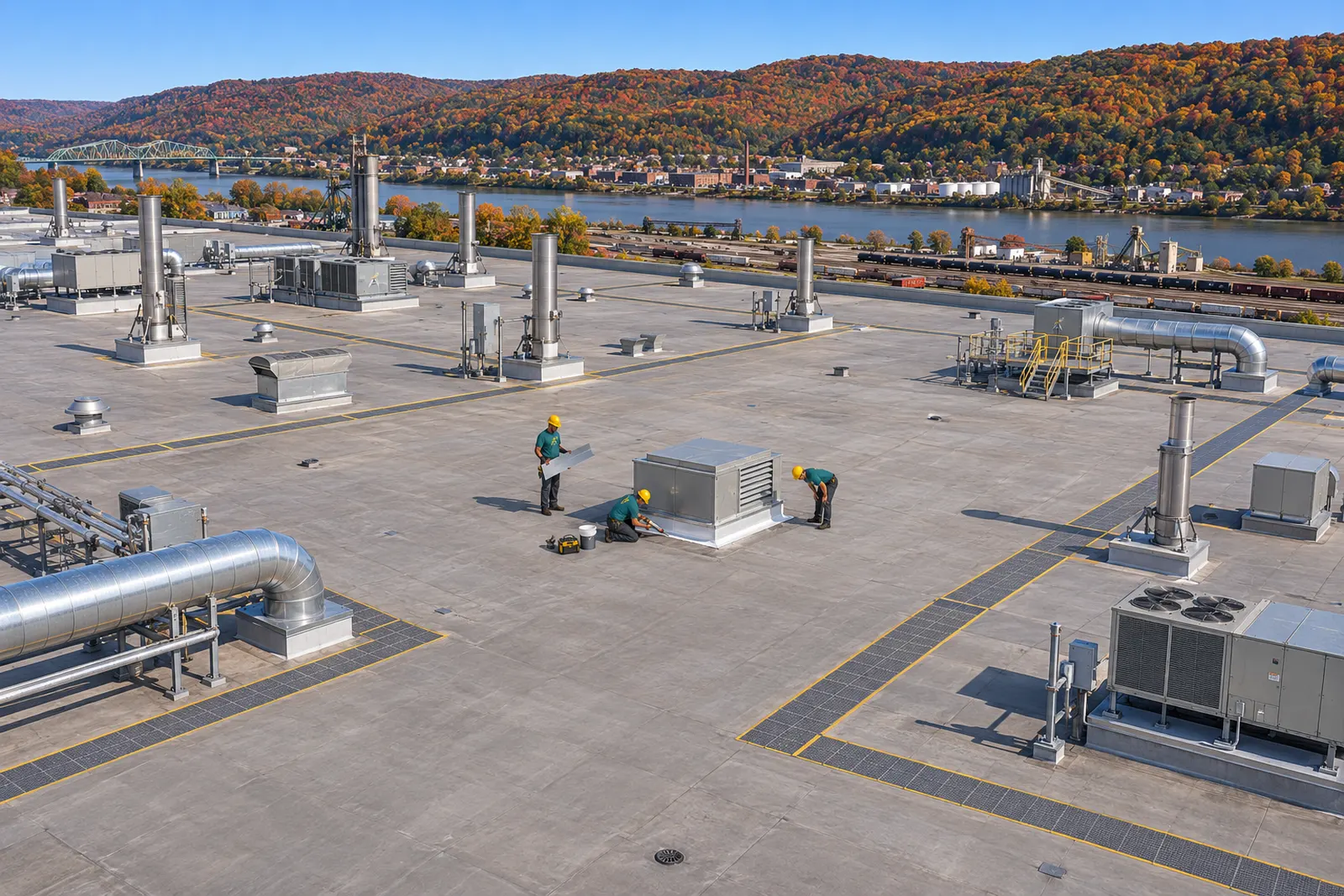
Industrial roof with rooftop units and exhaust fans near Ashland

Section Rebuild

Seams
Laps opening across the whole field
Blisters
Clusters spread over a roof section
Insulation
Soft, wet boards over wide areas
Ponding
Water across large areas after every rain
Membrane
Brittle and cracking at the surface

Flat Roof Damage We Repair in Ashland

Flat roofs fail at the same handful of spots. The visible gap is usually shorter than the failed bond around it.

Roofer probing an open lap on a flat commercial roof
Most Common

Split Seams and Open Laps

Water that sits at a drain or a T-joint works into the weld or tape until the lap lets go. On TPO the bond fails before the gap shows, so we probe both directions and mark where the opening really ends.

Usually Means: Scrub, reweld or prime and tape, then a cover strip past both ends.

  • Blisters

    Air or moisture trapped between layers swells in the sun and pushes the surface up, most often on built-up and mod bit roofs.

  • Ponding Rings

    Dirt rings around a drain set too high or a sagging board show where water sits after rain.

  • Punctures and Tears

    Dropped screws near rooftop units, hail on thin sheets and foot traffic over conduit open small holes.

  • Loose Drain Clamps

    A slipped clamping ring lets water bypass the drain bowl and run under the membrane.

Flat Roof Repair Options for Ashland Buildings

Each membrane takes its own primer, patch and tool. Mixing methods leads to patches that peel off within a season.

  • TPO Seam and Patch Welds

    Oxidized sheet gets scrubbed clean, then a new TPO patch is hot-air welded with round corners well past the damage.

    TPO
  • PVC Welded Patches

    Matching PVC goes on with hot air, kept clear of any asphalt product that would soften it.

    PVC
  • EPDM Primed Repairs

    Primer and a peel-and-stick EPDM patch, rolled firmly so the edges stay down on rubber seams and T-joints.

    EPDM
  • Mod Bit Cap Patches

    Torch, cold adhesive or self-adhered cap patches with granules embedded on any exposed patch.

    Mod Bit
  • Built-Up Plies

    Loose gravel comes off first, then new plies of felt and asphalt and fresh gravel over the repair.

    BUR

Benefits of Repairing Your Flat Roof

A flat roof repaired at the first open seam stays on the cheaper side of every decision that follows.

Boards Stay Dry

A lap closed before the next storm keeps water out of the cover board and insulation. Once those boards soak, the fix grows from a patch to cutting out the wet section down to the deck.

Drains Do Their Job

Cleared strainers and reset clamps move water off the roof before it finds a weak lap.

Sheet Keeps Its Life

A welded patch becomes part of the membrane instead of a cement smear that needs redoing.

Fewer Ponding Leaks

Tapered sumps and small crickets stop water sitting against curbs and seams.

Water Standing Near a Drain After Rain?

A clogged strainer or a drain set high holds water against the nearest seam. We clear it, check the clamp and look at the laps around it.

How an Ashland Flat Roof Repair Contractor Fixes a Seam

A seam repair on a flat roof follows the same order every time.

  1. Inspect Your Roof

    We walk the membrane, probe every lap near the leak and mark both ends of each opening with paint.

  2. Identify the Membrane

    An unknown sheet gets a small test cut so we order the right patch, primer and adhesive.

  3. Clean and Prep

    Dirt and oxidation get scrubbed off both sides of the lap, and torn edges are cut back so the patch lies flat.

  4. Weld, Prime or Cap

    TPO and PVC get hot air, EPDM gets primer and tape, and mod bit gets a cap patch.

  5. Probe Again

    Once the patch cools or cures, the repaired lap is probed end to end before we leave.

Related Repairs for Flat Roof Buildings

Flat roofs often share a building with other repair needs.

Ashland Flat Roof Repair Questions

The flat roof questions owners ask us most.

Seams and Blisters

How are split seams fixed on a flat commercial roof?

We find where the open lap starts and stops with a probe, scrub both sides, then reweld TPO or PVC with hot air or prime and tape EPDM. A cover strip runs past the opening, and the lap is probed again once it cools. Seams at drains and T-joints fail first.

Should blisters on a flat roof be cut open?

Small, firm blisters that stay closed get marked and watched. Soft or cracked ones get cut, dried and patched. A cluster across one section points to wet insulation, and a fresh blister near a leak calls for a core cut. Service paths go around blisters until they are repaired.

Water and Damage

Is ponding water a repair problem or a drainage problem?

It starts as drainage and turns into a repair once standing water finds a weak lap. A clogged strainer gets cleared, a high drain gets a tapered sump or retrofit insert, sagging boards get replaced, and water trapped behind a curb gets a small cricket. Ponding over large areas belongs with a recover or replacement.

How is a puncture in a flat roof membrane repaired?

Torn edges are cut back, the area is cleaned and a matching patch with rounded corners is welded or adhered well past the hole. We press around it first: soft insulation underneath means water got in, and that board is cut out and replaced before patching.

Why do roofs inside the Ashland floodwall overflow in heavy rain?

Clogged drains, scuppers and downspouts let storm water pile up behind parapets. The city's Floodwall Division runs six pump stations and over three miles of wall, but rooftop water is the building's job. Clearing strainers, enlarging overflow scuppers and resealing downspout joints come before any seam work.

Materials

Which repair method fits TPO, EPDM, modified bitumen and built-up roofs?

TPO and PVC take hot-air welded patches, EPDM takes primer and a peel-and-stick patch, modified bitumen takes a torch, cold adhesive or self-adhered cap, and built-up roofs take new plies of felt and asphalt under fresh gravel. An unknown sheet gets a test cut first.

Call an Ashland Flat Roof Repair Contractor

Tell us the membrane if you know it and where the water shows up. We will probe the laps and show you what opened.

Call Us (681) 224-8107